!!!!!

Science!!!!! :)

Saturday, April 14, 2012

Healthy vs Unhealthy Relationships

This is a comparison of the aspects of healthy and unhealthy relationships:

Healthy:
-Trust and understanding between partners
-Both enjoy being with each other
-The two people can function normally apart
-The couple can argue without breaking up
-Respect
-The two people rely on each other

Unhealthy:
-The relationship is purely physical
-The two people in the relationship cannot function apart
-Lack of trust
-The couple is too afraid to argue or argues all the time
-Lack of respect

          As you can see, a healthy relationship will include trust, respect, and understanding whereas an unhealthy relationship will not.  It is important to have these things in a relationship, because without them, you and your partner cannot truly relate to each other in the intimate way you should.  Trust makes you capable to rely on your partner and "share the work".  However, if you end up relying too much on the other person, it becomes an unhealthy relationship because you cannot function without them.  It is also important that the relationship is not only physical, because that can end up leading to physical abuse.    


Sunday, March 25, 2012

Science Gone Bad

          In 1939, Doctor Wendell Johnson decided to conduct an experiment on 22 orphans - ten of whom stuttered when they talked, and the rest with no speech impairments.  He divided up the ones that stuttered into two groups - one group that got negative reinforcement, and the other got positive reinforcement.  He also divided the children that spoke normally into two groups - one that was told they had good speech, and another that was told that they stuttered and that they needed to look out for errors all the time.  He wanted to make the group of stutterers with positive reinforcement stop stuttering and the group of children who were told they stuttered to stutter.  The children who were told that they had speech problems immediately began to think that they could not speak well, and many stopped talking completely.  After the experiment, they were told three times that they had no speech problems, but it did not work.  Even when they had grown up, although none of the children who had been experimented on stuttered, many had speech impairments and were reluctant to talk. 
          I think that this experiment was inhumane and that the doctor never should have gone through with it.

Resources:  http://www.neatorama.com/2011/03/23/5-science-experiments-gone-wrong/

Sunday, March 11, 2012

Current Events: Brain Parasite affects Dopamine Levels in Brain

          New studies show that a parasite called Toxoplasmosis gondii that directly affects how much dopamine there is in the human brain.  It is transmitted to humans through cat faeces that ends up on the fruits and vegetables we eat.  The parasite gets to our brain, where it then infects it by making a cyst in it cells and creating an enzyme called tyrosine hydroxylase, which is a chemical used by our bodies to make dopamine.  Because of this, a carrier of toxoplasmosis gondii can have very high levels of dopamine.  These discoveries may help scientists explain or find cures for dopamine-related disorders such as schizofrenia or Parkinson's disease.  It is estimated that around 22% of Americans have the parasite in their bodies, and most of them live normally.  However, the parasite can be dangerous to those not immune to its affects - especially pregnant women. 

Resources: http://www.sciencedaily.com/releases/2011/11/111104102125.htm

Wednesday, March 7, 2012

Onion Mitosis Lab

Guiding Question:  Approximately how much time do cells spend in each phase of the cell cycle?
Cells spend approximately 56% of their time in interphase, about 28% of their time in prophase, 8%  of their time in metaphase, 5% in anaphase, and 3% of their time in telophase.  We figured this out by analyzing how many out of 36 cells were going through which phases of mitosis.  20/36 were going through interphase, 10/36 through prophase, 3/36 through metaphase, 2/36 through anaphase, and 1/36 through telophase.  We then turned those fractions into percents. 

Procedure:
Perform the onion root tip simulation and tabulate the number of cells in each phase. Construct an appropriate graph using your data to present the relative time a cell spends in each phase of the cell cycle.

Table:   
This graph shows the number of cells going through each phase of mitosis, and the approximate percentage of the time they spend going through them. 

Graphs:
These graphs are analyses of our tables.  They both show how much time a cell spends on each phase of mitosis.  The pie chart shows this in contrast to the whole time spent going through mitosis, whereas the bar graphs shows this in comparison to each phase. 


Conclusion:
In conclusion, we can tell that the interphase part of mitosis is the longest part of the process that a cell devotes its time to.  Second comes prophase, then metophase, and after that anaphase and telophase.  Notice that as the mitosis process progresses, each phase takes a shorter and shorter period of time.  This, however, may not be completely reliable, since the onion-root biology website may not be correct.  With this in mind, I looked up the stages of mitosis over the internet, and the data we received from the onion website appear to be correct. 

Sunday, February 26, 2012

Current Events: A New Take on the Male Y Chromosome

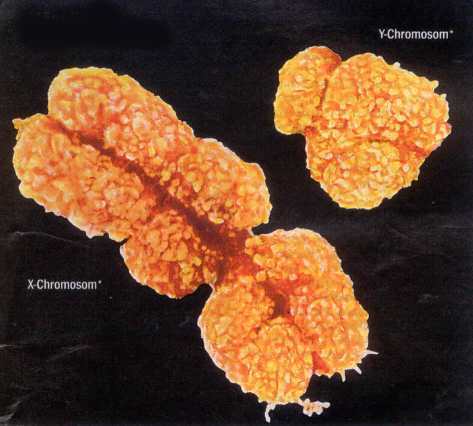
        There is a theory that sooner or later, the male gender will become extinct.  This is because old research has said that the male Y chromosome is genetically decaying, which means that there will no longer be men on this planet in five million years.  However, that was the old research.  In 2005, scientists compared the human Y chromosome with those of chimpanzees, who evolved away from humans six million years ago.  Now, they have also compared human Y chromosomes with those of the rhesus monkey, which have been a separate species from humans for 25 million years.  These studies show that the Y chromosome has only lost one gene in the last 25 million years.  Its genetic decay is very, very slow, if it has not stopped yet.  Men will be on this planet for many more millions of years to come.

Resource:
http://www.bbc.co.uk/news/science-environment-17127617

Monday, February 20, 2012

Current Events: Global Warming Affects Chipmunk Genes

          According to the University of California Berkeley, global warming is causing chipmunks living in the High Sierra to move up to higher and cooler land.  They were originally found at altitudes of 7,800 feet, but have now moved up by as much as 1,640 feet.  Because of this, they are losing their available habitat and are forced to live in smaller and more isolated groups.  This could lead to genetic diseases caused by interbreeding that would not have been present in the chipmunks' lives before.  In order to figure out exactly how much of an impact this is having on the genetic diversity of alpine chipmunks, scientists compared 146 DNA samples from from of these organisms living today, to 88 samples from past chipmunks.  These experiments resulted in the fact that alpine chipmunks now have a much less rich allele diversity than they did back when the 88 older samples were alive.  At the same time, scientists completed the exact same experiment with lodgepole chipmunks (another species of chipmunk that thrived in lower elevations than alpine chipmunks).  They did not find any radical genetic differences in this species, because they lived lower down, and did not have to migrate to higher altitudes in order to survive Global Warming.  The alpine chipmunks could face becoming threatened or even extinct wildlife if this continues. 

Resource:  http://summitcountyvoice.com/2012/02/20/global-warming-sierra-chipmunks-take-genetic-hit/

Sunday, February 5, 2012

Current Events: Possible New Cures

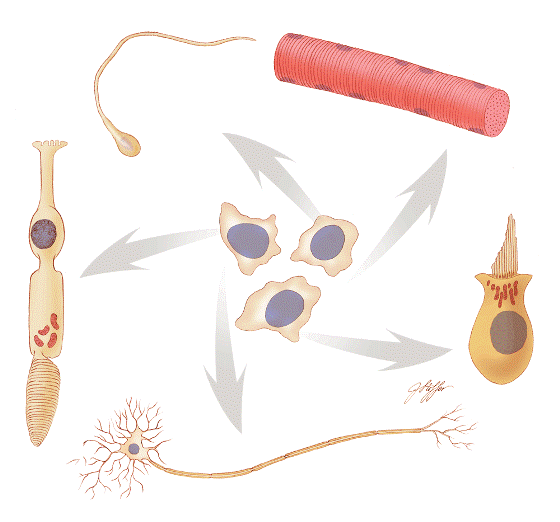
          Scientists may have made new breakthroughs with finding cures for previously incurable illnesses such as cancer and brain injuries.  They are trying to figure out how to develop and create real 3D stem cells that are very similar to those in a regular human body.  Stem cells are types of cells that can morph into other cells.  They have the potential to either stay in the form of stem cells or to change into red blood cells, brain cells, muscle cells, and other kinds of cells with specific purposes.  Stem cells can renew themselves, and the new stem cells also have the same properties as their "parents" where they can change into new cells.  Replicating these kinds of cells can help lead to new cures, and that is exactly what these scientists are trying to do.

Sources:
http://finance.yahoo.com/news/rbcc-explores-cures-cancer-brain-100000290.html
http://stemcells.nih.gov/info/basics/basics1.asp