!!!!!

Science!!!!! :)

Sunday, May 13, 2012

Current Events: Evolution in the Peppered Moth

Can you see the black moth?
          The peppered moth is one of the many examples of evolution in the wild.  Before the 19th century in Britain, the most commonly seen kind of moth was pale in color.  There was a very small percentage of dark or black moths, but almost all of them were lighter.  The pale moths were not very easily seen against pale backgrounds, whereas the dark ones stood out.  However, after the 19th century, Britain began producing more and more pollution, causing the death of pale lichens on trees where the moths lived and turning their bark black.  Consequently, the whiter moths showed up very well on the dark trees and became easy prey.  The black moths were not as easily spotted on the dark bark as the pale ones, and were not caught and eaten as often as the pale ones, and black soon grew to become the more common color of moths.  However, since the amount of pollution has decreased from the 19th century, the number of pale moths has risen again and the black moth population has gone down. 
          As you can see, these moths have evolved to fit their surroundings.  If they had all stayed white when the trees turned black, the entire moth population could have been wiped out by predators.  Because they evolved to become black to match the color of their habitats, the moths survived.  This is an example of evolution.

For more information, go to: http://www.truthinscience.org.uk/tis2/index.php/component/content/article/127.html

Tuesday, May 8, 2012

Reflection on Sex Eduation Unit

During this unit, I learned several things about sexual intercourse that I did not know before:
          -There are many many kinds of STDs that people do not know about, and the best way to protect yourself from them is ABSTINENCE!  (Not having sex.)
          -Many people around the world have a kind of STD that is a bacteria, but do not actually have any symptoms from them.
          -I learned all the parts of the reproductive organs in both male and female bodies.
          -You can get herpes by sharing a towel with someone else who has contracted it.
          -The menstruation cycle is a hormone-regulated cycle that is controlled by four hormones:  LSH, LH, Estrogen, and Projesterone.
          -There are gender stereotypes.
          -The differences between a healthy and an unhealthy relationship.
          -The different kinds of birth control, including condoms, birth control pills, the counting method, surgery, and ultimately abstinence.
          -The consequences of having unprotected sexual intercourse.
          -The process of a baby growing as a fetus inside their mother's uterus.
          -The treatment of STDs.


Saturday, April 14, 2012

Healthy vs Unhealthy Relationships

This is a comparison of the aspects of healthy and unhealthy relationships:

Healthy:
-Trust and understanding between partners
-Both enjoy being with each other
-The two people can function normally apart
-The couple can argue without breaking up
-Respect
-The two people rely on each other

Unhealthy:
-The relationship is purely physical
-The two people in the relationship cannot function apart
-Lack of trust
-The couple is too afraid to argue or argues all the time
-Lack of respect

          As you can see, a healthy relationship will include trust, respect, and understanding whereas an unhealthy relationship will not.  It is important to have these things in a relationship, because without them, you and your partner cannot truly relate to each other in the intimate way you should.  Trust makes you capable to rely on your partner and "share the work".  However, if you end up relying too much on the other person, it becomes an unhealthy relationship because you cannot function without them.  It is also important that the relationship is not only physical, because that can end up leading to physical abuse.    


Sunday, March 25, 2012

Science Gone Bad

          In 1939, Doctor Wendell Johnson decided to conduct an experiment on 22 orphans - ten of whom stuttered when they talked, and the rest with no speech impairments.  He divided up the ones that stuttered into two groups - one group that got negative reinforcement, and the other got positive reinforcement.  He also divided the children that spoke normally into two groups - one that was told they had good speech, and another that was told that they stuttered and that they needed to look out for errors all the time.  He wanted to make the group of stutterers with positive reinforcement stop stuttering and the group of children who were told they stuttered to stutter.  The children who were told that they had speech problems immediately began to think that they could not speak well, and many stopped talking completely.  After the experiment, they were told three times that they had no speech problems, but it did not work.  Even when they had grown up, although none of the children who had been experimented on stuttered, many had speech impairments and were reluctant to talk. 
          I think that this experiment was inhumane and that the doctor never should have gone through with it.

Resources:  http://www.neatorama.com/2011/03/23/5-science-experiments-gone-wrong/

Sunday, March 11, 2012

Current Events: Brain Parasite affects Dopamine Levels in Brain

          New studies show that a parasite called Toxoplasmosis gondii that directly affects how much dopamine there is in the human brain.  It is transmitted to humans through cat faeces that ends up on the fruits and vegetables we eat.  The parasite gets to our brain, where it then infects it by making a cyst in it cells and creating an enzyme called tyrosine hydroxylase, which is a chemical used by our bodies to make dopamine.  Because of this, a carrier of toxoplasmosis gondii can have very high levels of dopamine.  These discoveries may help scientists explain or find cures for dopamine-related disorders such as schizofrenia or Parkinson's disease.  It is estimated that around 22% of Americans have the parasite in their bodies, and most of them live normally.  However, the parasite can be dangerous to those not immune to its affects - especially pregnant women. 

Resources: http://www.sciencedaily.com/releases/2011/11/111104102125.htm

Wednesday, March 7, 2012

Onion Mitosis Lab

Guiding Question:  Approximately how much time do cells spend in each phase of the cell cycle?
Cells spend approximately 56% of their time in interphase, about 28% of their time in prophase, 8%  of their time in metaphase, 5% in anaphase, and 3% of their time in telophase.  We figured this out by analyzing how many out of 36 cells were going through which phases of mitosis.  20/36 were going through interphase, 10/36 through prophase, 3/36 through metaphase, 2/36 through anaphase, and 1/36 through telophase.  We then turned those fractions into percents. 

Procedure:
Perform the onion root tip simulation and tabulate the number of cells in each phase. Construct an appropriate graph using your data to present the relative time a cell spends in each phase of the cell cycle.

Table:   
This graph shows the number of cells going through each phase of mitosis, and the approximate percentage of the time they spend going through them. 

Graphs:
These graphs are analyses of our tables.  They both show how much time a cell spends on each phase of mitosis.  The pie chart shows this in contrast to the whole time spent going through mitosis, whereas the bar graphs shows this in comparison to each phase. 


Conclusion:
In conclusion, we can tell that the interphase part of mitosis is the longest part of the process that a cell devotes its time to.  Second comes prophase, then metophase, and after that anaphase and telophase.  Notice that as the mitosis process progresses, each phase takes a shorter and shorter period of time.  This, however, may not be completely reliable, since the onion-root biology website may not be correct.  With this in mind, I looked up the stages of mitosis over the internet, and the data we received from the onion website appear to be correct. 

Sunday, February 26, 2012

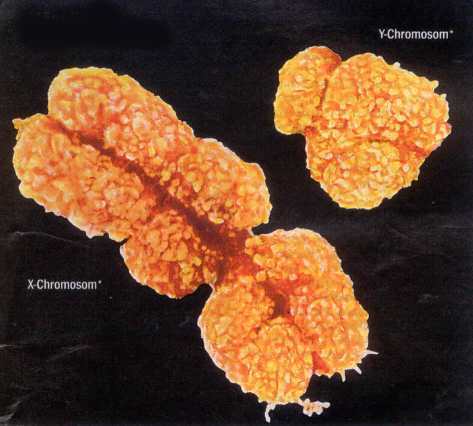
Current Events: A New Take on the Male Y Chromosome

        There is a theory that sooner or later, the male gender will become extinct.  This is because old research has said that the male Y chromosome is genetically decaying, which means that there will no longer be men on this planet in five million years.  However, that was the old research.  In 2005, scientists compared the human Y chromosome with those of chimpanzees, who evolved away from humans six million years ago.  Now, they have also compared human Y chromosomes with those of the rhesus monkey, which have been a separate species from humans for 25 million years.  These studies show that the Y chromosome has only lost one gene in the last 25 million years.  Its genetic decay is very, very slow, if it has not stopped yet.  Men will be on this planet for many more millions of years to come.

Resource:
http://www.bbc.co.uk/news/science-environment-17127617

Monday, February 20, 2012

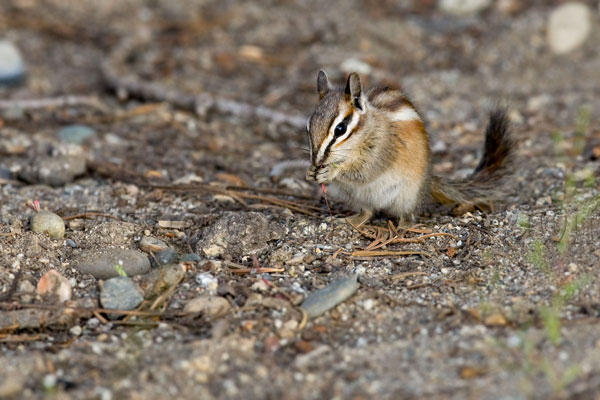
Current Events: Global Warming Affects Chipmunk Genes

          According to the University of California Berkeley, global warming is causing chipmunks living in the High Sierra to move up to higher and cooler land.  They were originally found at altitudes of 7,800 feet, but have now moved up by as much as 1,640 feet.  Because of this, they are losing their available habitat and are forced to live in smaller and more isolated groups.  This could lead to genetic diseases caused by interbreeding that would not have been present in the chipmunks' lives before.  In order to figure out exactly how much of an impact this is having on the genetic diversity of alpine chipmunks, scientists compared 146 DNA samples from from of these organisms living today, to 88 samples from past chipmunks.  These experiments resulted in the fact that alpine chipmunks now have a much less rich allele diversity than they did back when the 88 older samples were alive.  At the same time, scientists completed the exact same experiment with lodgepole chipmunks (another species of chipmunk that thrived in lower elevations than alpine chipmunks).  They did not find any radical genetic differences in this species, because they lived lower down, and did not have to migrate to higher altitudes in order to survive Global Warming.  The alpine chipmunks could face becoming threatened or even extinct wildlife if this continues. 

Resource:  http://summitcountyvoice.com/2012/02/20/global-warming-sierra-chipmunks-take-genetic-hit/

Sunday, February 5, 2012

Current Events: Possible New Cures

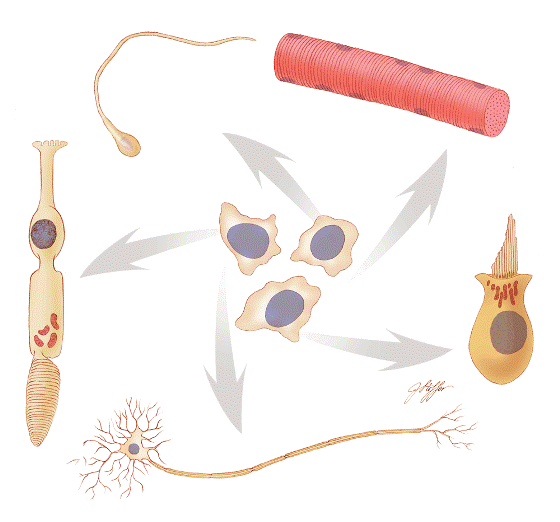
          Scientists may have made new breakthroughs with finding cures for previously incurable illnesses such as cancer and brain injuries.  They are trying to figure out how to develop and create real 3D stem cells that are very similar to those in a regular human body.  Stem cells are types of cells that can morph into other cells.  They have the potential to either stay in the form of stem cells or to change into red blood cells, brain cells, muscle cells, and other kinds of cells with specific purposes.  Stem cells can renew themselves, and the new stem cells also have the same properties as their "parents" where they can change into new cells.  Replicating these kinds of cells can help lead to new cures, and that is exactly what these scientists are trying to do.

Sources:
http://finance.yahoo.com/news/rbcc-explores-cures-cancer-brain-100000290.html
http://stemcells.nih.gov/info/basics/basics1.asp

Thursday, January 26, 2012

Reflection - Cracking the Code of Life Part II

          We finished this movie in class today.  It showed more diseases that can be passed on through heredity like cancer.  One thing I really liked about this movie is that it showed a variety of things.  It hopped back and forth from showing us stories about people with disease caused by their genes, and the two competing teams of scientists trying to be the first ones to map someone´s entire DNA structure.  The movies made me more aware of the role genetics plays in our lives, and how there are some things we can´t escape because it´s in our DNA.  Something I found ironic was the fact that in my previous post, I had made connections between Cracking the Code of Life and Gattaca, and the documentary had clips of Gattaca in it, and talked about how our future might very well turn into one just like in the world of Gattaca.  All in all, I thought that Cracking the Code of Life was a good movie full of information for people who want to learn about genetics.

Wednesday, January 25, 2012

Reflection on Cracking the Code of Life Movie

          So far, this movie has taught me a lot about genetics, and since it's pretty interesting, what I learn sticks in my brain.  One really important thing that I learned from this movie is that even just one wrong letter in your DNA can decide whether you will grow up to have schizophrenia, a deathly disease, cancer, or some other horrible illness.  Just one out of all the millions of A's, C's, G's, and T's in your DNA can determine how your life will end.  One example of a rare but horrible disease that is caused by two parents passing two of the same recessive alleles to their child was showed in the movie.  One pair of parents each had the Tay-Sachs gene in their bodies.  Both of them passed this gene on into their child, and their child developed this disease.  The father's identical twin brother had just resolved that he had to be his brother's rock and support him, when he discovered that his child, too, had Tay-Sachs.  It was such a sad story because Tay-Sachs is such a rare disease.  Even if one parent has the allele for it, they won't be able to pass it on so that it harms their child, and if both parents have it, there is only a 25% chance of their kids getting the disease. 
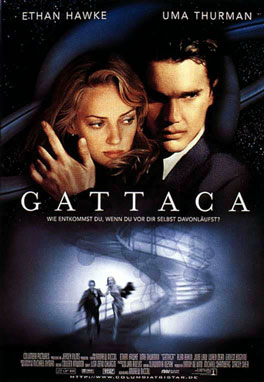
          The movie then discussed how scientists may be able to map one person's entire DNA, and tell them which diseases they may develop, how long they may live...everything about their future.  Personally, I think this is a great idea if you are only doing it to stop yourself from passing illnesses on to future generations.  However, I feel that if we have this ability to map out peoples' lives in our hands, our world will become kind of like the one in the movie GATTACA.  You will only be able to do a certain job because of the DNA you have, and you won't be allowed to do other things because of your genes.  I don't think that this would be such a great thing, and I hope that if our planet does become like GATTACA, it doesn't happen in my lifetime.

Saturday, January 21, 2012

Current Events: Twins and Heredity

          National Geographic is talking about studies on twins and how they can help scientists discover exactly how much of an influence heredity has on our lives.  One very interesting story featured in the article was about two twins who were separated at birth.  Coincidentally, both families who adopted each twin named their kids Jim.  The two twins were reunited when they were 39, and they realized that, even when they were separate, they had led similar lifestyles.  Both Jims had married and divorced women called Linda, and then remarried to women called Betty.  They had named their sons James Allan and James Alan, and they had both taken their families on vacation to the same beach in Florida.  Both men had had dogs named Toy, and each had been part-time sheriffs, dabbled in carpentry, smoked the same kinds of cigarettes, and drank the same kinds of beer.
          I thought that this section in the article was very interesting, because it helps show exactly what a strong pull genetics has in our lives.  When I read it, I was shocked that the two Jims even married wives with the same names.  How does liking different names have anything to do with genetics?  But how can it be a coincidence that so many of the names in the two Jims' lives were the same?  This article was also very thought provoking, because it also said that even though they had been raised in different families, both had similar IQ scores.  Later in the article, it stated that 75% of IQ differences was because of genes, and not the environment around the people.  I don't really like that idea, because they are trying to say that how smart you are depends on what you inherited from your parents.  I think that your surroundings and how hard you work also has an influence on your IQ, and I just don't really think it's fair that you inherit your smarts.

Resource:  National Geographic Magazine for January 2012, page 54

Mendel's Pea Experiment

         Gregor Mendel was a monk who lived in what we now know as Czech Republic.  He enjoyed gardening, and one day he became curious about the fact that some pea plants were tall and others were short; some were yellow, and some were green etc.  Mendel decided to check this out, so he forced a tall pea plant and a short pea plant to mate with each other by collecting the pollen from one and placing it in the pistil of the other.  He made sure that neither plant mated with its own type.  The pea plants produced from that experiment were tall - not of medium height like you would expect to get by mixing a tall and a short plant, but tall.  After many more experiments, Mendel then proceeded to mate the offspring of the original pea plants with each other.  Curiously, three out of four pea plants were tall, but one was short. 
          From these experiments, Mendel became the first investigator of genetics.  The parent plants were both purebred short and tall pea plants.  When they were mated to produce F1 offspring, each parent plant passed on one allele.  (An allele is a form of a gene that changes is in charge of changing only one aspect of a trait.)  The tall plant passed on an allele for being tall, and the short one passed on an allele for being short.  If the dominant or tall allele is represented by a capital T and the short or recessive allele is represented by a lowercase t, then the alleles for the F1 offspring looked like Tt.  What Mendel began to discover was that a recessive allele will only be visible in an organism if it is the only allele for that trait present.  If there is one tall and one short allele, then the plant will be tall.  If there are two tall alleles, then the plant will be tall.  The only way the plant will be tall is if it has two short alleles.  This is why none of the F1 offspring were able to be short, because they always had one short and one tall allele.  However, when Mendel mated F1 offspring with each other to make F2 offspring, he noticed something strange:  approximately 1 in every 4 pea plants created by two F1 offspring were short.  This was because, although all the F1 offspring were tall, they each had one short and one tall allele.  When two of them were mated, there was a small possibility that, out of Tt and Tt alleles, a seed would be generated that would be tt. 
          The experiment we did was that we had a bowl full of yellow and black balls to represent peas.  The ratio of yellow to black peas was uneven, and there were many more yellow peas than black ones.  We took turns pulling out four "peas" from the bowl and recorded our data.  We did this 20 times.  Each time, we wrote down how many yellow and how many black balls we pulled out of the bowl, and then we averaged our results.  In the end, we pulled out 2.85 yellow peas and 1.15 black peas, which averages down to three yellow and one black pea.  Mendel, on the other hand, would have had to do this experiment MANY more times, since he did not know any of the things we do now about genetics.  Mendel probably had to plant 50 to 100 pea plants to be sure of his data.

Thursday, January 12, 2012

Reflection on Gattaca

          I really enjoyed this movie.  I thought that it was really interesting how everyone was chemically made to be immune to diseases, live long lives, and have overall good bodies physically.  Also, scientists were able to get rid of traits such as attention deficit disorders and anger management problems.  However, I thought it was really unfair that people who didn't have great genes were not allowed to do things like fly into space, but that others who were genetically modified could take good jobs just by giving in a urine sample.  Even if someone had a really good brain, they would not be permitted to do the really important stuff.  If you had not been made in a test tube, then you were not expected to be great physically, either.  No matter how hard you trained, everyone would expect you to lose in sports because of your genes.  I also thought that it was really interesting that scientists were able to figure out one person's whole life at birth.  The main character was told that he had a 99% chance of heart problems, an expected life span of 30.2 years, and many other things the second after he was born.  From then on, people could tell everything about you just by taking a urine, hair, blood, or skin sample from your body.  This whole idea of genetics and DNA was very, very interesting and overall, I enjoyed the movie.  Even though it's fictional, I learned a lot about how DNA is almost everything about you from the film.

Monday, December 12, 2011

Science Essay: Acid Rain

          Acid rain is yet another form of pollution.  Caused by burning coal, driving cars, erupting volcanoes, and other means – both natural and man-made, acid rain can cause serious harm to the animals and people around it.  Acid rain is caused by an excess of nitric and sulfuric acids in the atmosphere.  When it falls down in the form of rain, or is combined with dust, it affects the environment around it in negative ways.  When you add acid to ponds and lakes, aquatic life is put into danger.  Fish die out and those that eat them must starve.  When acid lands in soil, many plants cannot survive, and herbivores do not have enough food.  The effects of acid rain snowball out of control, like a wave of dominoes.  Acid rain can destroy a whole way of living for the animals living in one area.  However, many scientists are trying to figure out ways of preventing this big problem.  Acid rain is an issue we must all try to change. 
When gasses such as carbon dioxide, carbon monoxide, and substances like lead and other air pollutants are released into the atmosphere, acid rain is produced.  Acid rain is the product of this pollution: an excess of nitric and sulfuric acids is spread over large areas of land through rain (in wet places) and dust (in dry places).  There are many reasons why acid rain is caused – both man-made and natural.  Erupting volcanoes and rotting plants can cause the toxic gasses to go up into the atmosphere, but the majority of acid rain is caused by humans.  When we drive cars and ride in planes and trains and boats, we release carbon dioxide and other dangerous substances into the air.  Acid rain can fall in two categories: wet deposition and dry deposition.  Wet deposition occurs when acidic chemicals are blown into wet areas, which results in acidic water.  Dry deposition happens in very dry areas, where there isn’t very much rain.  The acid chemicals end up being distributed in dust and dirt, instead of water.  Both of these ways of releasing acid rain into the environment are very harmful for people and animals. 
            Acid rain can affect both humans and animals, but it is most dangerous towards aquatic life.  As acidic water flows downhill, it deposits aluminum in nearby streams, rivers, and lakes.  When it settles in a lake, the pH of that lake goes down, becoming more and more acidic.  This means that even as more acid is being added to underwater ecosystems, toxic aluminum is being deposited there as well.  Many fish and other marine animals cannot survive in areas of low pH.  At a pH of five, most fish eggs will find it impossible to hatch, and at any pH lower than five, many more adult fish will die.  Some animals, such as frogs, have developed a tolerance toward acid.  However, the insects they depend on for food may not be able to withstand water with a low pH.  So even if a particular species can survive in acidic conditions, the prey they catch cannot, so they will die anyway.  Not only is the livelihood of frogs and fish damaged, but birds are affected, too.  Snails find it difficult to survive in areas of high acidity, because they depend on calcium found in soil.  Much of this mineral is lost when it is replaced by acid.  If snails don’t find enough calcium in their habitat, they cannot survive, and die out.  This causes a problem for the birds.  Snails are a high source of calcium, and eating them helps birds to lay strong eggs.  When there aren’t enough snails for birds to eat, then the eggs, the birds can’t get enough calcium in their systems, and they are forced to lay eggs with very thin shells.  Many eggs are unable to hatch because of shell breakage and other accidents.  If the population of birds is depleted, then there is less food for predators who depend on birds to eat.  This, in turn, affects the carnivore population.  It is one big chain reaction. 
            There are many good things being done to help reduce the amount of acid rain produced by factories and cars.   According to the website epa.gov, instruments such as catalytic converters help reduce the amount of harmful gasses released into the atmosphere when we drive.  Also, “scrubbers” are used to reduce the amount of nitric acids that escape from factory smokestacks.  Not only can we try to reduce the amount of nitric and sulfuric acids we produce, but we can also attempt to prevent them from reaching the air.  We can do this by using alternative energy sources such as solar, wind, and hydroelectric power.  These are examples of “green” energy sources, and they have very minimal negative impacts on the environment.
            Acid rain is a serious issue that we all need to be aware about.  It is an overdose of nitric and sulfuric acids in the atmosphere that become absorbed into the natural environment.  It is caused by cars, factories, and other sources that produce exhaust.  Acid rain affects the natural habitats of animals and people around it in very negative ways, and can damage a whole way of living in an ecosystem.  Fortunately, scientists are learning how they can help prevent the spread of acid rain, and, in doing so, help our environment.  

Works Cited
“Acid Rain.” Protecting the Home we Live in:  Environmental Issues. Novi Meadows Elementary, 2002. Web. 28 Nov. 2011. <http://library.thinkquest.org/‌CR0215471/‌acid_rain.htm>.
“Acid Rain.” US Environmental Protection Agency. US EPA, 24 Mar. 2011. Web. 28 Nov. 2011. <http://www.epa.gov/‌acidrain/‌index.html>.
“Acid Rain/‌Prevention.” PB Works. PB Works, 2007. Web. 6 Dec. 2011. <http://acidrain.pbworks.com/‌w/‌page/‌1319114/‌Prevention>.


Tuesday, November 22, 2011

Burning Paper Lab

Science Paper Lab

Research Question:  How does changing the state of paper affect how fast it burns?

Background Information:  The reaction we are creating is a chemical reaction involving turning paper into ash.  This cannot be reversed, so it is a chemical reaction.  

Hypothesis:
Riena:  I think that if we use paper that has been wet and then dried, it will burn the longest.  This is because remnants of water may still remain in paper.  The more wet a piece of paper is, the longer it will take to burn.  

Variables:
    -Independent Variable:  This is the variable that we change.  In this experiment, it will be the state of the paper we burn that is the dependent variable.
    -Dependent Variable:  This is the variable that is the response of what happens to the independent variable.  In this case, the dependent variable is the time it takes for each paper to burn.  
    -Controlled Variable:  The controlled variable is one that stays the same throughout the experiment. It does not change and is not allowed to change unpredictably.

Safety Cautions:
-While burning the paper, make sure that you burn it in a fire-safe container
-Be careful that none of the fire escapes from the container
-Do not let anyone touch the paper while  it is burning
-Do not get too close to the paper while it is burning
-You may want to wear goggles to protect your eyes, although these are not vital to the experiment

List of Materials:
-Four sheets of A4 paper
-Matches
-Something to burn the paper in
-Writing Materials
-Stopwatch

Procedure:
1.) Burn a regular piece of paper
2.) Record observations*
3.) Crumple up that piece of paper the same size as the first, and burn it
4.) Record observations
5.) Wet another piece of paper, let it dry, crumple it up, and burn it.
6.) Record observations
7.) Wet another paper, let it dry, and then burn it.
8.) Record observations

*Fill out all observations in data table below


Data Table:
State of Paper:Time it Takes to Burn (seconds): Other Observations:
Regular 78Had to re-light
Wet and Dried 31Much wind
Crumpled 67
Crumpled, Wet and Dried 105

Graph


Conclusion: 
          My hypothesis was correct.  The "crumpled, wet and dried" paper took the longest to burn by a long shot.  As you can see in both the graph and table above, the paper that we soaked in water, dried, and crumpled up took 105 seconds to burn, whereas the paper that burned the second slowest took 78 seconds to burn.  The "wet and dried" paper might also have taken a longer time to burn, but while we were burning it, a gust of wind hit us.  This meant that there was more oxygen, and therefore more fuel, which meant that the paper burned more quickly. 

Further Inquiry:
          While we were conducting the experiment, many things went wrong.  There was an inconsistent amount of wind, and we had to re-light some of the papers.  The amount of wind in an experiment matters because wind affects how much oxygen is present.  Oxygen fuels fire: the more oxygen, the greater the fire.  Also, too much wind will blow out a small fire, and then we have to re-light the paper.  One of the fires went out, so we had to relight the paper, which took time.  This would have made us collect incorrect data.  If we were to do this experiment again, we should light our papers on a wind-less day.  This means we would not have wind, and our experiment would be unaffected.  If we wanted to collect even more information, we could measure the mass of each paper before and after we soaked them in water and dried them.  If we did that, we could see if paper gains mass after being soaked in water. 

Monday, November 7, 2011

Color Experiment

         In science class, we conducted a lab to figure out whether or not food coloring from skittles was polar or non-polar, and whether or not food coloring has more than one color in it at a time.  The way we did this was we dropped some water on different colored skittles to get the color out.  Then, we dabbed the color onto coffee filter paper.  After that, we put the paper in water.  Water traveled up the paper, and the idea was to see if the colors would travel up, too.  Since water is polar, and polar substances wash polar substances, if the colors rose, then they would be polar.  The coffee filter paper is non-polar, and since non-polar sticks to non-polar, we knew that if the color stayed, it was non-polar.  Also, if there were many different colors in one dye, they should have risen so that there was one color on top of another.  As you can see in the picture above, the experiment was done properly, and you can see that there are multiple colors.  The colors that rise the most, will be the most polar, as they will have traveled the furthest with the water.  The colors at the bottom near their dots are not as polar, because they have not followed the water up so far. 
As you can see in the picture to the left, we started out by putting the color on the dots.  However, we could not get enough dye to go on, or it was too diluted by water, so the colors are not very clear. 

In the photo to the right, you can see that the water traveled up the paper, but there is not very much color visible that has traveled up from the dots.  We did this experiment wrong, because we didn't put enough color on the paper, so it kind of failed.  We can't see anything going up the paper.  If we were to try this lab again, we should add more skittle dye to the paper, and we might want to use white paper instead of brown so that the color would show more. 

Tuesday, October 25, 2011

Candy Molecules

 During science today, we made molecules out of candy.  Different candies were used to represent different atoms. 


1.)  The first molecule we made was sodium chloride (NaCl).  As you can see, the gummy circle is sodium, and the big chocolate marshmallow is chlorine.  All the x's around the chlorine atom represent its seven electrons, and the little dot by the sodium atom represents its one electron.  They are sharing sodium's electron, because if chlorine gains one more electron, it becomes stable, which is what all molecules want to become. 


2.)  The second molecule we made was water, or H2O.  The pink candy represents the oxygen atom, and the two gummy circles represent the hydrogen atoms.  The x's are the hydrogen atoms' electrons, and the dots are the oxygen's electrons.  As you can see, both hydrogens are sharing their electrons with oxygen, so oxygen has the use of eight electrons.  Therefore, it is stable.  


3.)  The third molecule we made was carbon dioxide or  CO2.  The big chocolate marshmallow in the center of the molecule is a carbon atom, and the two gummy circles represent oxygen atoms.  As you can see, the carbon atom is sharing two of its electrons with each of the oxygen atoms, and each of the oxygen atoms are sharing two of their electrons with the big carbon atom.  This means that each atom has a total of eight electrons each.  They are all stable, and they are all "happy". 


4.)  The last molecule we made was CH4.  The picture doesn't show it, but there were really four gummy bears surrounding the Turkish Delight, not three.  Each gummy bear represented one hydrogen atom, and the Turkish Delight represented the carbon atom.  We drew the diagram incorrectly.  Correctly drawn, all the hydrogen atoms would have only one electron, which they would be sharing with the carbon atom.  That way, the carbon atom, which already has four electrons, will end up having eight - one more from each of the four electrons.  However, each hydrogen atom has five electrons, so just ignore that and pretend that they each only have one. 

Sunday, October 23, 2011

Current Events: New Zealand Oil Spill

Dead Seabird - Killed by the Oil
        There has been a massive oil spill in the sea around New Zealand recently.  Over 50 tons of oil has been released into the sea, and so far, only 10 tons have been removed.  Over 300 Defense Force personnel are working on getting rid of the oil, as well as specialists from Australia, the Netherlands, and the UK.  This oil spill is a big threat to the local oceanic wildlife of New Zealand.  Birds that depend on water for food, like penguins, swim through the oil and get it all over their feathers.  When they preen, they could get the oil into their system, and there is also a large risk that they will contaminate their chicks with it.  Birds like petrels, which don't swim in the water, but dive down to catch fish, will also be affected.  When they get oil in their feathers, it makes it harder for them to fly.  Orca whales, bottlenose dolphins, baleen whales, and beaked whales are also threatened as oil spills into their migratory routes.  Some animals, which are already endangered, are in the most danger from this oil spill.  If too many of them are wiped out, they may become extinct.  There are several volunteer groups working very hard at protecting and cleaning the animals that are being affected by the oil, but they can only do so much.

For more information, go to:  Oil Spill

Thursday, October 6, 2011

Making an Atom

          During class, I made a scale model of a sodium atom.  The scale was 250 picometers/cm.  The only things that were not modeled to scale were the electrons.  Electrons are supposed to be 2000 times smaller than a proton or neutron, but the electrons I made were probably only about 100 times smaller.  There is a picture of my atom to the right.  As you can see, the neutrons and protons are showed separately in different shades of green, and the electrons are laid out in levels like a Bohr model.